Hidden Meanings in Klimt's 'The Kiss': What You Didn’t Know
Gustav Klimt’s The Kiss is often celebrated as the culmination of his Golden Age, but its origins are rooted in a deeper, more personal development of the artist. Created during a period of profound personal transformation and social change, The Kiss symbolises the culmination of Klimt’s journey away from conventional academic art towards a more liberated expression of symbolic and emotional depth. This masterpiece was created at a time when Vienna was a centre of intellectual and artistic ferment, with Klimt at the heart of its avant-garde scene.
Table of Contents
- The Creation of ‘The Kiss’: Klimt’s Inspiration
- Innovations in Technique: Beyond the Gold
- Decoding the Controversy: Breaking Societal Norms
- A Viral Sensation in the Early 20th Century
- The Kiss’s Influence and Legacy
- Explore iconic art and more at KunstLoft
- The Enduring Impact of ‘The Kiss’
- Frequently Asked Questions
The Creation of 'The Kiss': Klimt's Inspiration
The inspiration for The Kiss is thought to have come from Klimt’s travels through Europe, particularly his visit to Italy, where he was influenced by the Byzantine mosaics in the Basilica of San Vitale in Ravenna. The use of gold leaf in these mosaics would later become a hallmark of his most famous works.
Crafting the Artwork
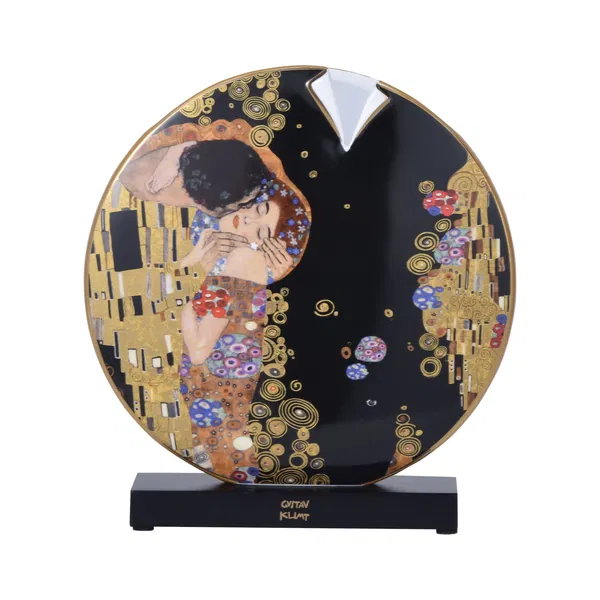
Klimt created The Kiss between 1907 and 1908, at a time when he was deeply involved in the Vienna Secession movement, which sought to break away from traditional academic art. Depicting a couple wrapped in an elaborate floral blanket as they share a moment of intimacy, the work demonstrates Klimt’s departure from conventional norms.
Innovations in Technique: Beyond the Gold
While the gold-leaf technique of The Kiss is widely recognised, Klimt’s method was revolutionary in its application and composition. He combined traditional oil painting with layers of gold and silver leaf, but also incorporated platinum, a rare and innovative choice for the time. This use of different metals added a nuanced lustre and depth that changed under different lighting conditions, making the painting a living entity that interacted with its surroundings. In addition, Klimt’s method of pressing patterns into the gold leaf created a textured, three-dimensional effect that made the figures almost leap off the canvas, blurring the lines between reality and artifice.
Decoding the Controversy: Breaking Societal Norms
At the time of its creation, The Kiss was controversial for its frank depiction of intimacy and sensuality, which clashed with the more conservative values of Viennese society. Its eroticism was both celebrated and criticised as a bold statement of personal and artistic freedom.
Reactions from the Art World
The art world was divided over The Kiss. While many praised its innovative technique and emotional power, others criticised it for straying too far from traditional artistic values. Nevertheless, it cemented Klimt’s reputation as a leading figure in modern art.
A Viral Sensation in the Early 20th Century
Upon its completion, The Kiss was immediately purchased by the Austrian Gallery, reflecting its immediate acceptance and acclaim. The public was captivated by its beauty and the story it told, making it a popular subject for reproduction in prints and postcards.
Over the years, The Kiss has permeated various aspects of culture, becoming a symbol of love and artistic beauty in popular media, literature and even advertising, demonstrating its enduring appeal.
The Kiss's Influence and Legacy
“The Kiss has inspired countless artists with its blend of realism and symbolism, emotional depth and aesthetic innovation. Its influence can be seen in many forms of modern and contemporary art, where the boundaries of expression and the use of materials are constantly being challenged.
The Kiss in Today’s Cultural Context
The Kiss continues to resonate today, often cited in discussions of Romantic art and its power to convey universal emotions. It remains a testament to Klimt’s vision and a beacon of artistic innovation.
Explore iconic art and more at KunstLoft
At KunstLoft, we celebrate the vibrancy of art with a huge selection of quality items, including hand-painted artworks and unique art-inspired products. Enjoy exclusive art on sale, or find your muse among our curated inspiration categories featuring over 1000+ products. Whether you’re looking for a heartfelt gift for a loved one or a masterpiece for your own space, we’ve got you covered. Plus, sign up for our newsletter to stay up to date with our ongoing promotions and discover how each piece can bring artistic flair to your life – only at KunstLoft.
The Enduring Impact of 'The Kiss'
More than a century later, The Kiss continues to resonate with audiences around the world as a symbol of romantic idealism and artistic freedom. Its legacy is sustained not only by its visual beauty and emotional depth, but also by its role in the narrative of art history as a beacon of modernism and rebellion against the strictures of traditionalism. “The Kiss remains a testament to the enduring power of art to challenge, transform and connect with the human spirit on a profound level.
Frequently Asked Questions
Gustav Klimt was inspired by a combination of personal experience and the cultural milieu of Vienna at the turn of the 20th century. His travels to Italy, where he saw the golden mosaics of Byzantine churches, significantly influenced his artistic direction and led to the ‘golden phase’ of his career, during which he created The Kiss. This phase is characterised by the prominent use of gold leaf, a technique that became a hallmark of Klimt’s most famous works.

“The Kiss was considered controversial for its sensual and intimate depiction of a couple in an embrace, which was quite daring for the conservative social norms of early 20th century Vienna. The use of gold leaf and the intimate, almost sacred depiction of romantic love pushed the boundaries of traditional art and morals of the time, challenging conventional views of art and propriety.
“The Kiss is housed in the Belvedere Gallery in Vienna, Austria. It has been part of the Belvedere’s collection since it was purchased directly from Gustav Klimt in 1908, shortly after it was exhibited. It remains one of the most popular and visited works of art in the gallery, attracting thousands of visitors each year who come to admire one of the highlights of Klimt’s golden period.
Related Articles about Famous Artist
Picture credits: © Pexels – Alena Yanovich; © Youtube – Curious Muse; © Pexels – Almira; © KunstLoft