
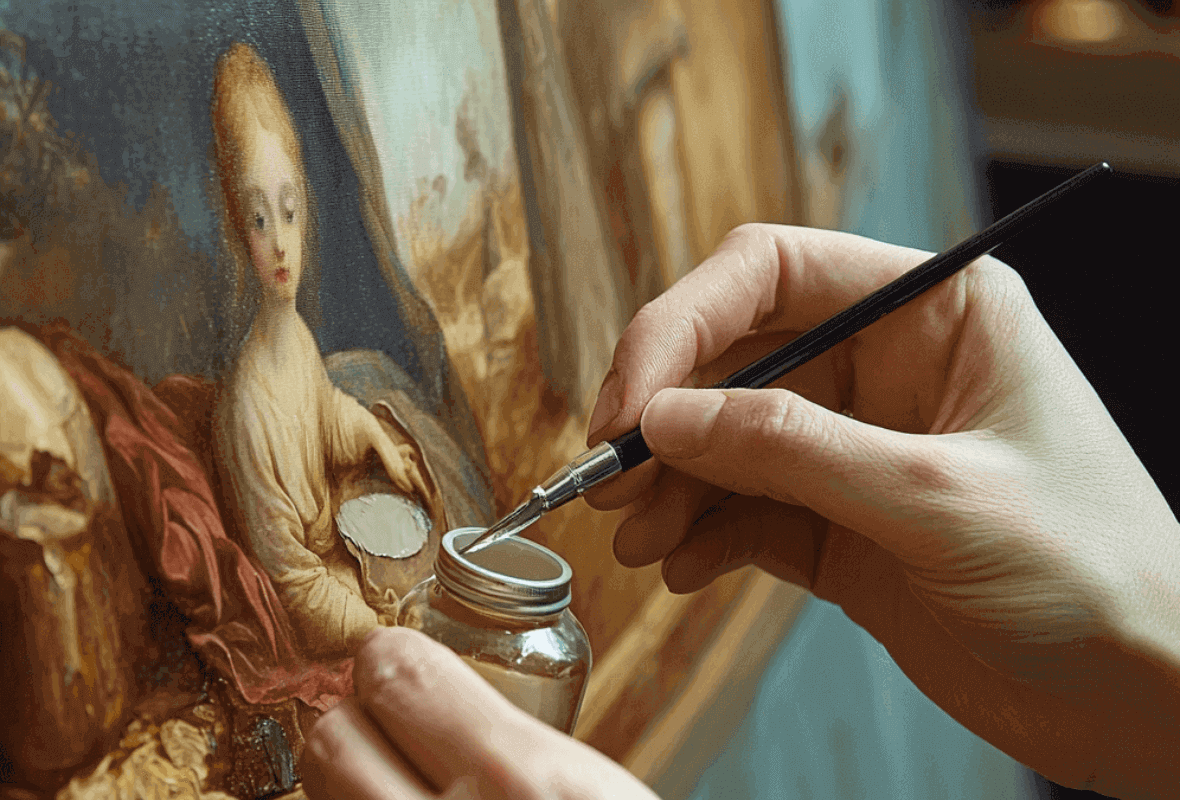
Painting Restoration: What's behind it?
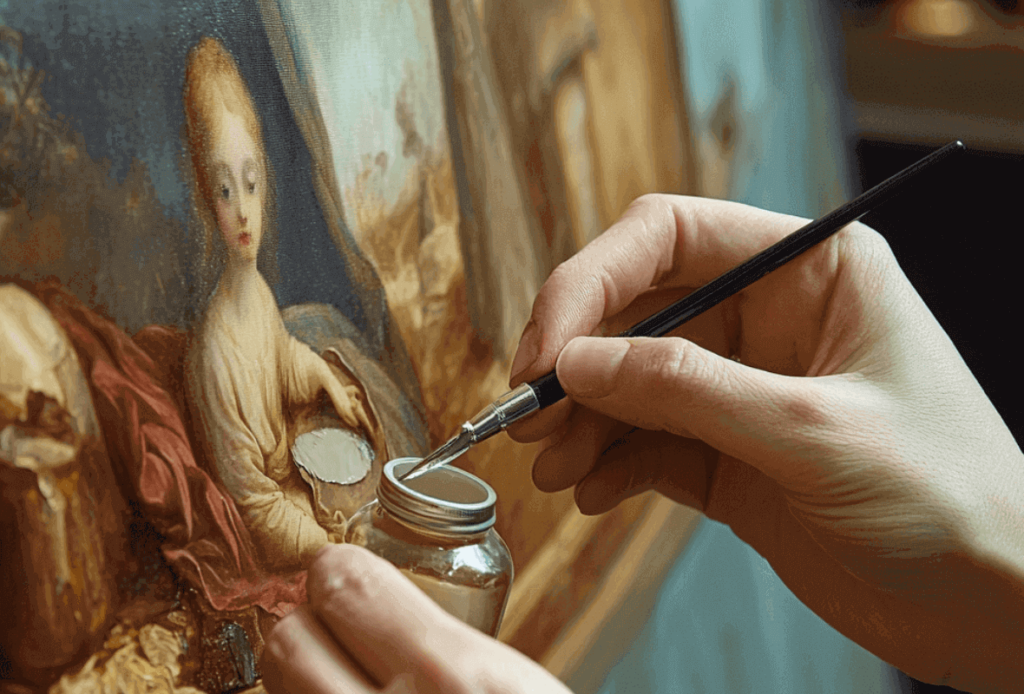
We associate our favorite works of art not only with a beautiful painting, but also with special stories and memories that we like to think back on. The older a painting gets, the more susceptible it becomes to dirt, fading colors and various damages. To preserve the quality and expressiveness of the artwork for as long as possible, there are ways to protect it. In this article we will shed light on what is behind the restoration of a painting and how you can also ensure yourself that you will enjoy your work of art for many years.
What is Painting Restoration and Why is it so Important?
The restoration of paintings and murals has an important place in the history of art and culture. Experts distinguish in this specialist discipline between the Restoration and conservation of historical objects.
The information and tips on the restoration and care of paintings contained in this article have been compiled to the best of our knowledge and belief. Please note, however, that the restoration of valuable or historically significant works of art in particular should always be carried out with care and expertise. In case of doubt or major damage, we recommend that you always consult a qualified restorer. The implementation of the methods presented here is at your own risk and we accept no liability for any damage that may result from improper use.
Restoration
Restoration measures are used primarily to improve legibility, restore the original condition, and understand the historical significance of the artwork. This includes cleaning the surface of the painting, removing varnish and cementing chipped areas, as well as retouching missing areas and painting over color rubbings.
See here the step by step restoration of a historical oil painting from 1840:
The restoration of paintings and murals has an important place in the history of art and culture. Experts distinguish in this specialist discipline between the Restoration and conservation of historical objects.
Restoration
Restoration measures are used primarily to improve legibility, restore the original condition, and understand the historical significance of the artwork. This includes cleaning the surface of the painting, removing varnish and cementing chipped areas, as well as retouching missing areas and painting over color rubbings.
See here the step by step restoration of a historical oil painting from 1840:
Conservation
The focus of conservation measures is preventive action against decay and for the stabilization of the work of art. Examples include closing cracks in the fabric, repairing damaged wooden panels, and strengthening the painting layer.
Interesting insights into how paintings look after professional cleaning:
Preventive conservation
In addition to the two main disciplines, there is also preventive conservation. Here, specialists address the environmental conditions of the work of art in order to counteract a reduction in quality. Glazing, making a back protection and ensuring optimal site conditions in terms of lighting and climatic conditions are in the foreground.
Conservation or restoration should only be carried out if the art object has lost its significance and function due to destruction or decay. Reasons why the condition of an art object may deteriorate are sometimes frequent transportation. Paintings as exhibits are shown in many different museums and galleries or change hands – so repositioning is not uncommon. Each transport and reprocessing poses a risk of damage. Other causes are climate changes, soiling, water and fire damage and unprofessional pre-restoration.


How is a Painting Restored?
1. Examination
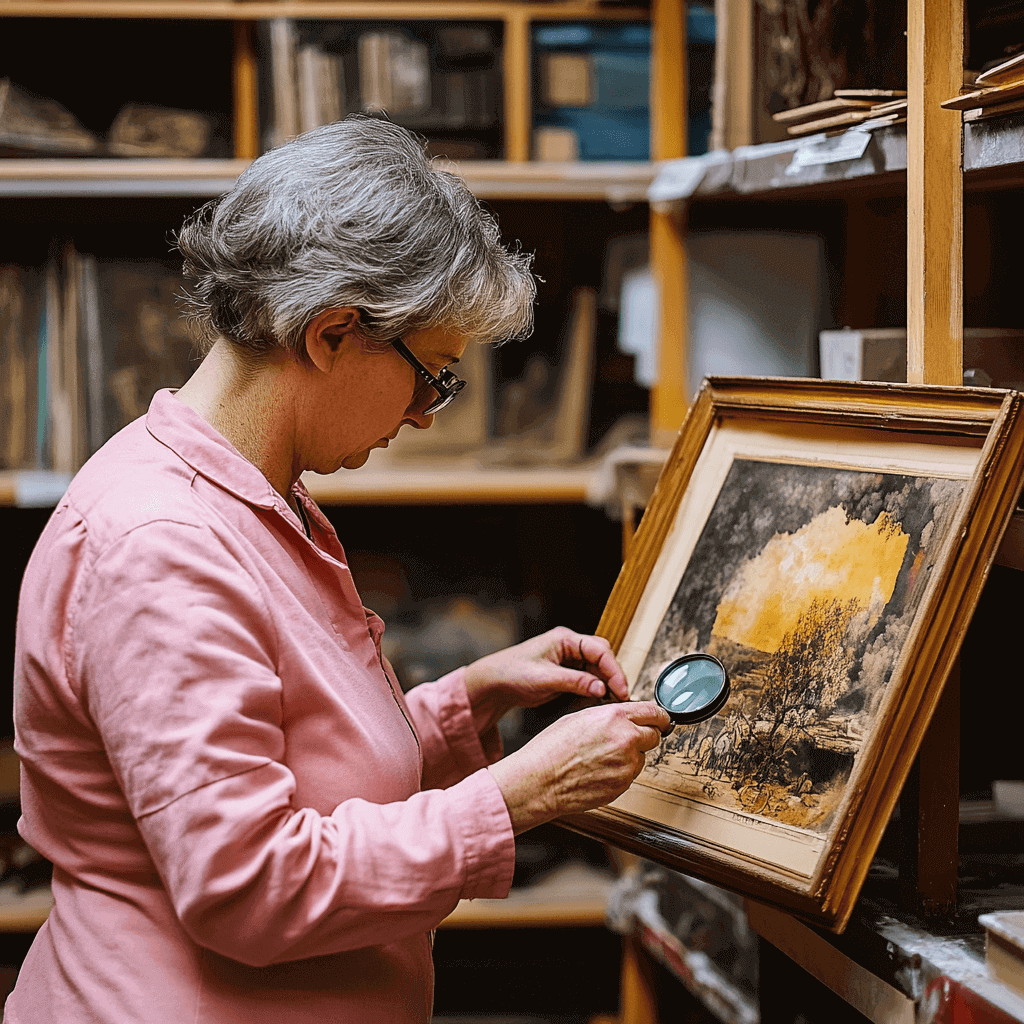
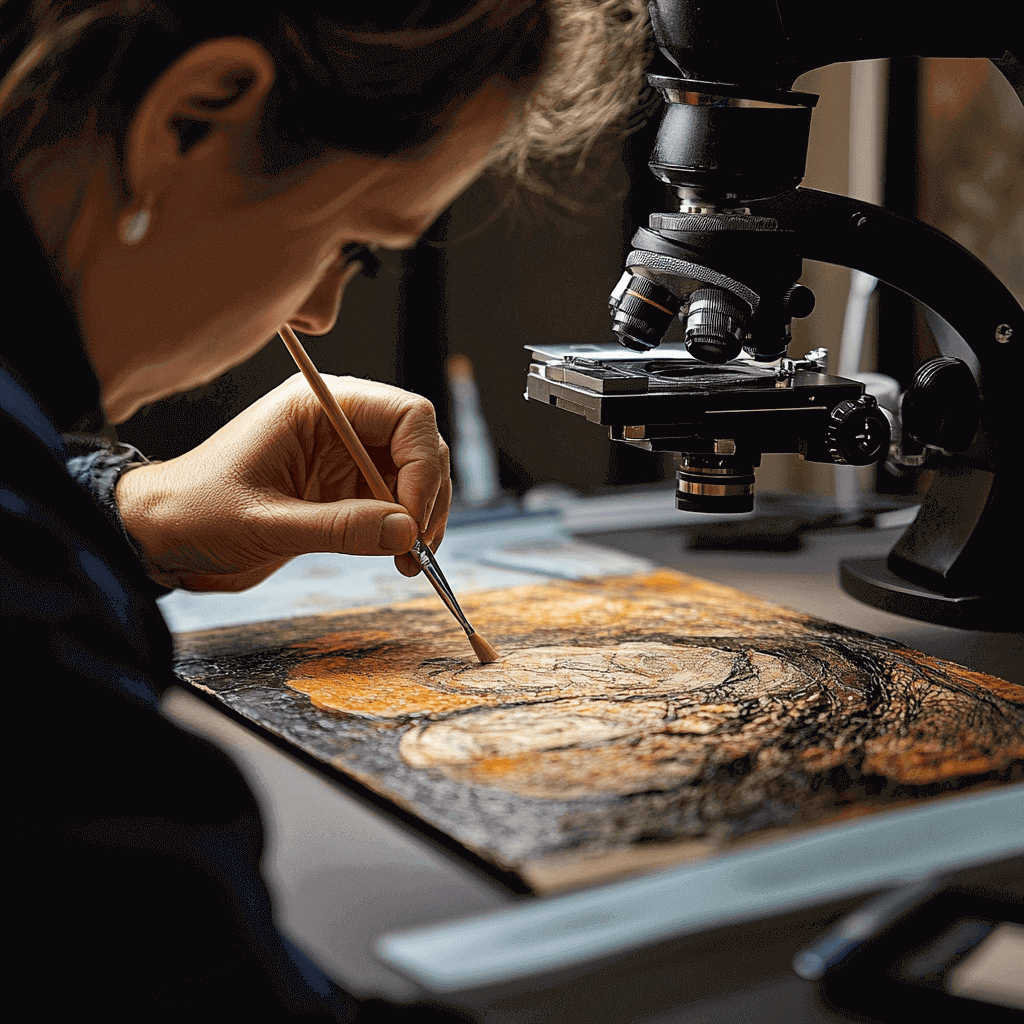
Before the actual restoration stands a thorough investigation of the work of art. The degree of restoration depends on many factors, so the first step is for the expert to check the condition of the painting. Restorers examine the painting technique and the painting support of the work of art and determine what soiling and damage is present. They also document the state of preservation and the quality of the colors as well as the condition of the canvas. All results are recorded photographically and in writing.
The examination can be carried out with a magnifying glass or a microscope, ultraviolet light establishes fluorescence typical of the material. Some analyses also require a material sample of binder, pigments or wood.
Tip: If you are not sure whether your work of art should be restored, an expert opinion can provide information about the state of preservation of the painting.
2. Research
Which restoration measures and materials the restorers* take depends on this step. In this step they deal with the History of origin of the artwork. To do this, they research all the important information about the artist and his or her oeuvre. In addition, painting techniques and materials are analyzed, since the use of certain color pigments and painting materials varied greatly from era to era. The better the restorers know the style, technique and work of the artist, the more professional the restoration will be.
3. Common Damages, Measures and Costs
Art-historically important paintings are exposed to external influences and changes for many years. Typical deterioration and damage are:
- Soiling, e.g. due to soot, smoke and dust
- Yellowing and darkening
- Cracks, scratches, dents, holes
- Varnish removal, due to which the image loses color strength
- Faulty machining due to improper restoration
Based on the damage and the previously evaluated examination, the restorers select a suitable restoration method.
The most common work consists of removing dirt and yellowing with scalpels and solvents, closing holes and cracks with fiberglass and needle and thread, filling in imperfections or paint rubbings with paint and brush, applying varnish as a protective layer, and applying gold leaf to the frame. Some restorers also offer frame repair by using stucco to model frame damage.
The Condition of the artwork and the severity of the pollution decide how expensive the restoration will be. The cost of a restoration depends on the size of the painting, the amount of work and the experience of the restorers. As a rule, you can start with a Hourly rate between 50 € and 100 € calculate.
Tip: Ask for a cost estimate before the restoration. Many restorers also offer this service with a remote estimate using photos.
This interesting report shows a restorer at work:
What is behind the Job Description of a Restorer?
Behind the job description of the restorer is a long tradition. Whereas in the past training as a craftsman was a prerequisite, a degree with the subject of conservator-restorer from a university of applied sciences is now required. After the three-year bachelor’s program, there is the option of earning a master’s degree. This is necessary if you want to become a self-employed conservator.
During their training, conservators have the option of focusing on specialize in certain areas, such as paintings and sculptures. Additional courses and stays abroad help to deepen knowledge and skills learned.
The requirements for restorers are set high. To get one of the coveted study places, an aptitude test must be passed. The basic requirements are an interest in art, architecture and interior design as well as craftsmanship and design skills, a meticulous approach to work, analytical and conceptual skills and a high level of quality awareness.
Conservators either work independently in their own restoration workshops or are employed by museums, archives and in research.
How can I best care for my painting or restore it myself?
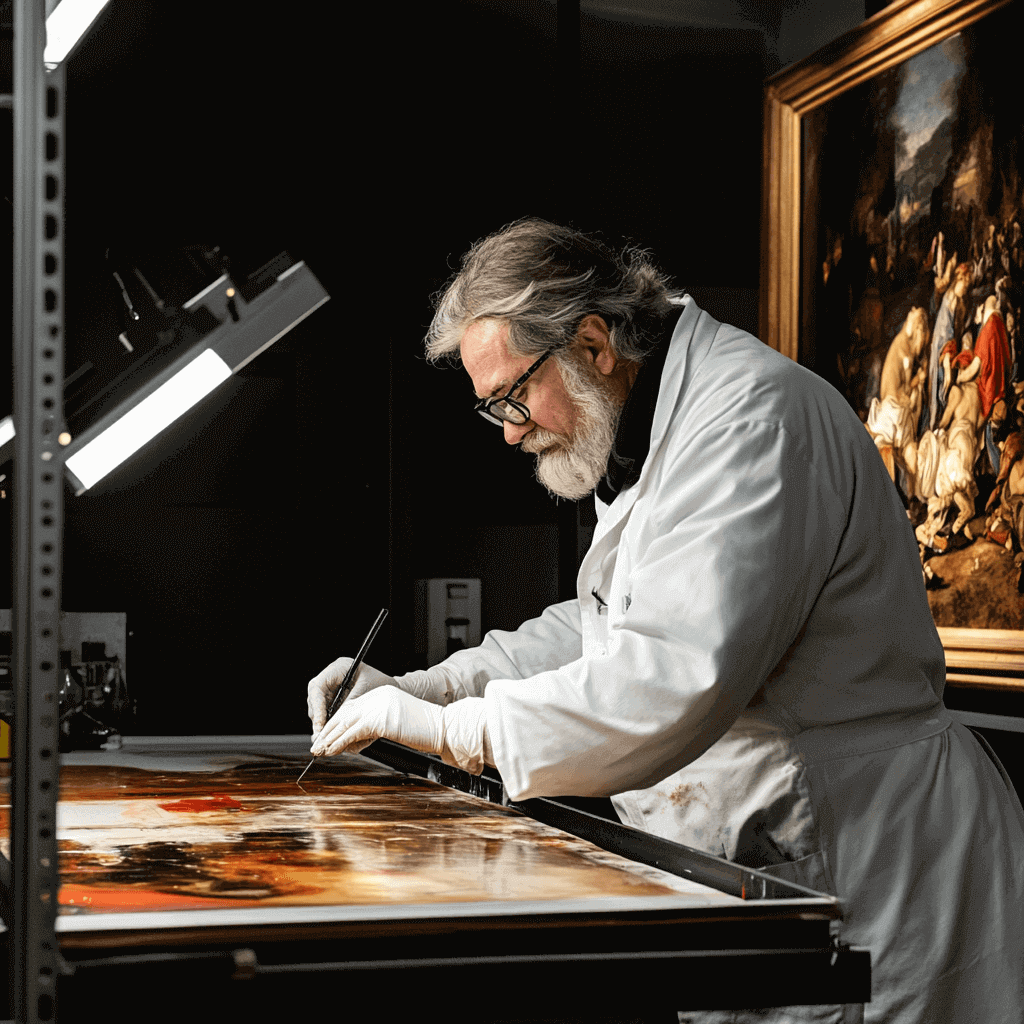
An expert painting restoration should always use the first choice be, if you want to restore the original expressiveness of your work of art. Certain restoration techniques have been taught in many years of training and require a lot of experience and expert knowledge.
The great art of the restorers consists in this, restore the legibility of the object while leaving as few traces as possible on the substance. Unprofessional restoration can worsen the condition of the painting and damage it further. Especially in the case of old and valuable paintings, you should contact qualified restorers..
Nevertheless, there are some Tricks and tips, that even laymen can implement to best care for their painting. These recommendations refer only to oil paintings. Paintings made with acrylic, watercolor or other paints are difficult to clean.
- If the painting is slightly soiled by a film of varnish, this can be gently remove with turpentine oil. Note, however, that in addition to the dirt, the paint may also come off easily. Once you have removed the dirt, apply a protective layer of linseed oil varnish using a varnish brush or a cotton ball wrapped in silk. The new layer of varnish will make the colors shine and protect them from dirt and UV rays.
- A fine brush or feather duster can also be used to gently remove dust and other dirt.
- You often read the tip to clean painting surfaces with pieces of bread, potato or onion. But you should do this avoid at all costs, as the starch it contains can have a negative effect on image carriers such as linen. In addition, food treatment can spread microorganisms that destroy the image in the long term.
- As a precaution, you should find a suitable place for your painting, it depends on temperature, humidity and sunlight. In general, any place is recommended, which does not have large fluctuations in humidity and which is not exposed to direct sunlight. Therefore, it is not advisable to hang in the basement, bathroom, kitchen or above radiators.
- Empty spaces or small stains can be touched up with the right colors. For this, however, in addition to special brushes and different colors, a lot of experience and a good eye are indispensable.
- In the case of a damaged image layer or canvas, old varnish removal and canvas re-covering, we recommend that you contact experienced restorers* in advance.
The short video shows the exciting story of the famous painting Salvator Mundi by the painter and universal genius Leonardo da Vinci. The painting was sold for $450 million at a Christie’s auction in 2017 after an elaborate restoration, making it the most expensive painting ever sold at auction:
Oil and Acrylic Paintings for Every Style from KunstLoft
Hand painted murals in Oil and Acrylic with diverse motifs and in styles ranging from Abstract to Figurative you will find at KunstLoft. How to integrate them optimally into your interior, as well as decoration ideas and many creative ideas for the design with paintings for living room, kitchen and office can be found in our magazine:
Image credits: © KunstLoft