Painting is a form of artistic expression that evokes emotions, tells stories and captures memories. Colour plays an important role in painting because it can convey moods, create depth and texture, and enhance the overall visual impact of a work.
In this article, we’ll give you tips on how to mix colours like a pro to achieve the colours and effects you want in your paintings. Whether you’re a beginner or an experienced painter, these techniques will help you take your colour mixing skills to the next level and create truly masterful paintings.
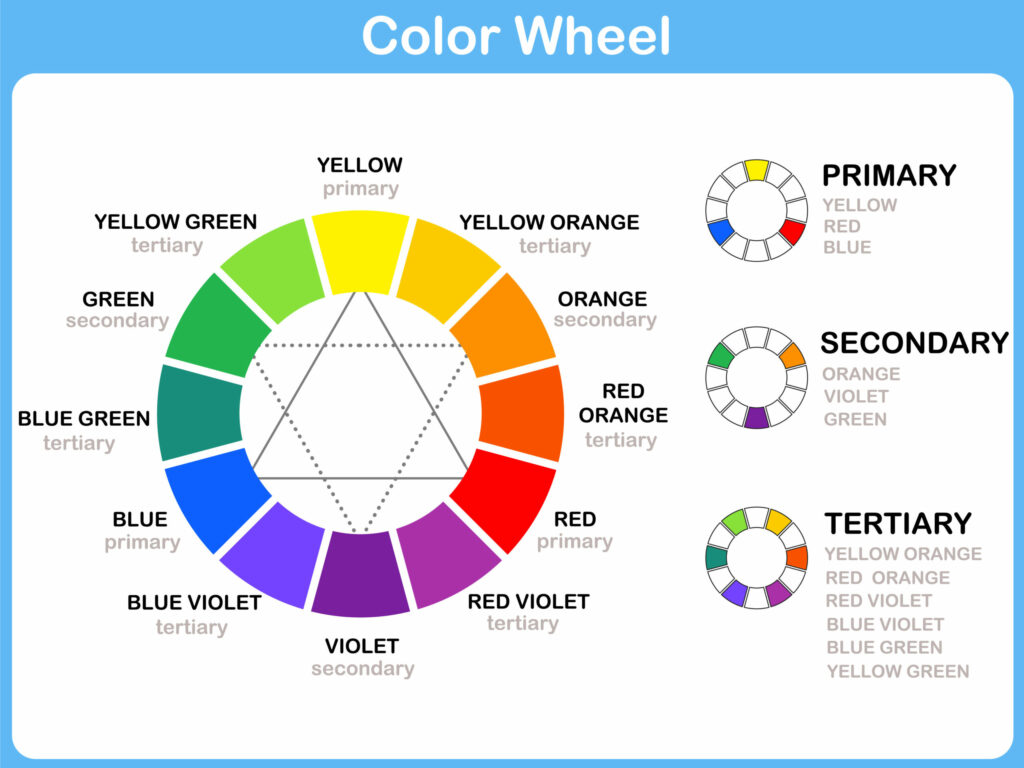
The colour wheel is a tool that helps artists understand the relationships between colours. It consists of twelve colours arranged in a circle, with the primary colours (red, yellow and blue) at the center. The colour wheel is divided into three sections: Primary Colours, Secondary Colours, and Tertiary Colours.
Primary colours
The primary colours are the three basic colours that cannot be produced by mixing other colours. These are red, yellow and blue. All other colours are created by mixing these three primary colours.
Secondary colours
Secondary colours are created by mixing two primary colours. The three secondary colours are green (mixture of yellow and blue), orange (mixture of red and yellow) and violet (mixture of red and blue).
Tertiary colours
Tertiary colours are created by mixing a primary colour with a secondary colour. There are six tertiary colours: red-orange, yellow-orange, yellow-green, blue-green, blue-violet and red-violet.
Start with a limited palette
An effective way to improve your colour mixing skills is to start with a limited colour palette. By limiting the number of colours you use, you can develop a better understanding of how colours interact with each other and how they work together to create harmonious colour combinations.
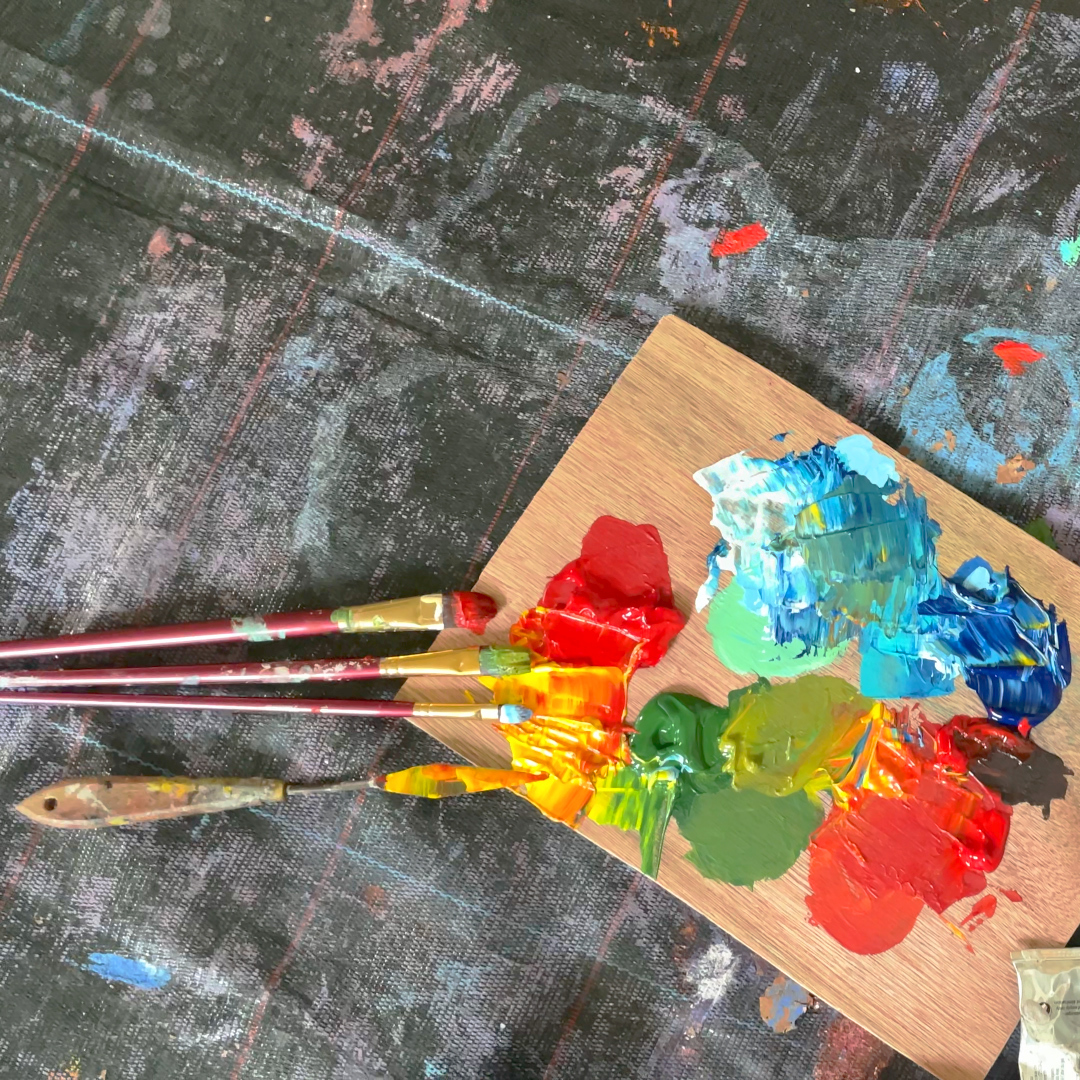
When choosing colours for your limited palette, it’s best to start with the primary colours: red, blue, and yellow. These colours are the building blocks for all other colours and can be mixed to create a wide range of secondary and tertiary colours.
The advantage of a limited colour palette is that you have to be more deliberate in your colour selection. Instead of relying on a wide palette of colours to create a painting, you need to carefully consider each colour and how it interacts with the other colours in your painting. This can help you develop a better sense of colour harmony and create a painting that is cohesive and visually appealing.
Start with lighter colours
A common mistake that many beginners make when mixing colours is to start with a dark colour and try to lighten it. This often results in dull or dull colours that lack vibrancy and clarity. It is better to start with lighter colours and gradually work your way up to darker tones.
When you start with lighter colours, you have more control over the intensity and tone of the colour. This allows you to create a wider range of shades and tones by gradually adding more pigment or changing the proportions of the mixed colours.
Mixing colours is not an exact science, and different colour ratios can produce very different results. Therefore, one of the most important tips for achieving the perfect hue in your images is to experiment with different colour ratios.
Mix small amounts of colour at first and change the ratio until you find the colour that best suits your needs. Remember that some colours are more dominant than others. For example, yellow is a very strong and dominant colour, while blue is less dominant. Therefore, a small amount of yellow can overpower a larger amount of blue, resulting in a greenish hue. Similarly, red is a dominant colour that can quickly overpower other colours when used excessively.
As you experiment with different ratios, pay attention to the changes in hue, saturation, and value. This will give you a better understanding of how the different colours interact and how to achieve the colours you want.
Practice makes perfect
Practice is the key to mastering any skill, and mixing colours is no exception. To master mixing colours, it is important to practice regularly and experiment with different techniques and approaches.
A good way to practise mixing colours is to make a colour chart or colour wheel. This involves mixing different colours in different ratios and hues and arranging them systematically to create a visual reference for later use.
Another useful practise technique is making colour studies or sketches. This involves making small paintings or sketches that focus on specific colour combinations or techniques. By creating colour studies, you can experiment with different colour palettes, try new techniques, and refine your skills in a more focused and deliberate way.
It’s important to remember that mastering any skill takes time and dedication. Don’t be discouraged if your first colour mixing attempts don’t turn out the way you want. With practice and perseverance, you can develop the skills and intuition you need to mix colours like a pro.
If you want to learn more tips on painting, read the following articles: